
Direct answer: Twelve months contain 52.14 weeks. The math is simple: a common year of 12 months has 365 days, and 365 divided by 7 equals 52.14. Put another way, 12 months hold 52 full weeks plus 1 leftover day, or 2 leftover days in a leap year. That leftover day is the reason a year is never exactly 52 weeks long.
Why Is 12 Months Not Exactly 52 Weeks?
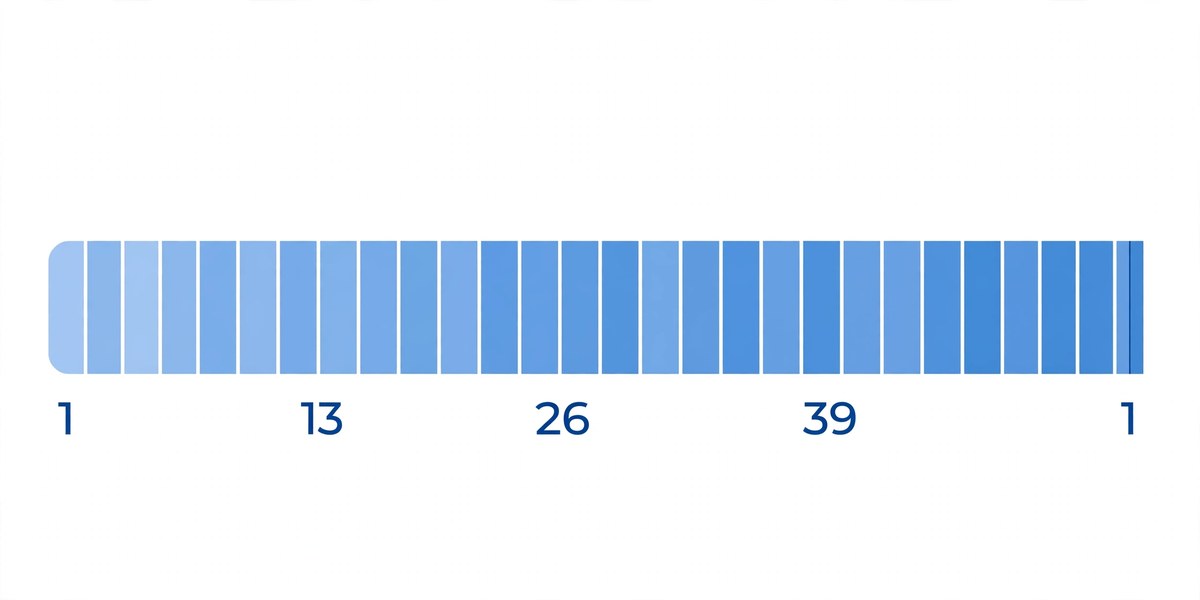
The confusion comes from a tidy-looking multiplication that does not quite work. Fifty-two weeks times 7 days equals 364 days, but a common year has 365 days and a leap year has 366. The year always overshoots 52 full weeks by a day or two:
| Year Type | Days in 12 Months | Exact Weeks | Full Weeks Plus Leftover |
|---|---|---|---|
| Common year | 365 | 52.14 | 52 weeks + 1 day |
| Leap year | 366 | 52.29 | 52 weeks + 2 days |
| Average Gregorian year | 365.2425 | 52.18 | 52 weeks + 1.7 days |
So “12 months” and “52 weeks” are close but not identical. The 1.7-day average gap per year is the same leftover time that forces leap years and, in some years, a 53rd week. It also explains why the total number of weeks in a year is usually stated as 52, even though the calendar always carries a little extra.
How Many Weeks Are in Each Month?
Months do not divide into whole weeks either, because they run 28 to 31 days. Here is every month with its day count and its exact week count:
| Month | Days | Weeks |
|---|---|---|
| January | 31 | 4.43 |
| February | 28 (29 in leap years) | 4.00 (4.29 in leap years) |
| March | 31 | 4.43 |
| April | 30 | 4.29 |
| May | 31 | 4.43 |
| June | 30 | 4.29 |
| July | 31 | 4.43 |
| August | 31 | 4.43 |
| September | 30 | 4.29 |
| October | 31 | 4.43 |
| November | 30 | 4.29 |
| December | 31 | 4.43 |
No month holds a whole number of weeks except February in a common year, which is exactly 4. Every other month spills 2 to 3 days into a fifth partial week. A quick note on precision: the per-month figures above are rounded, so they add to about 52.17 rather than the exact yearly total of 52.14. For planning, the useful average is 4.345 weeks per month, which is 52.14 divided by 12.
Does a Leap Year Change the Answer?
Yes, slightly. A leap year adds February 29, giving the 12 months 366 days instead of 365. Divide by 7 and you get 52.29 weeks, or 52 full weeks plus 2 leftover days. The next leap years are 2028 and 2032.
Over a full 400-year Gregorian cycle, 97 years are leap years, which is why the average year settles at 365.2425 days and the average 12-month span at 52.18 weeks. Individual years never hit that average exactly; they land on either 52.14 or 52.29, and the long-run average is what calendar designers use.
The extra day matters more than it looks. Those 2 leftover days instead of 1 are what shift weekday patterns year to year. In 2026, a common year starting on a Thursday, the single leftover day is a Thursday, which means 2026 has 53 Thursdays. In leap years the two leftover days can push week-numbering systems into adding a full 53rd week. Week numbers also shift with these leftover days, so it helps to know what week of the year it is and how week numbers are calculated: see our guide on finding the current week number.
Where Does This Math Matter in Real Life?
The gap between 12 months and 52 weeks is small, but it shows up constantly in American work and money life:
- Monthly budgeting: a “4-week month” budget is short by about 0.345 weeks every month. Budgeting with the true average of 4.345 weeks per month keeps yearly totals accurate.
- Biweekly paychecks: most years bring 26 paychecks, but the leftover days accumulate until some years produce a 27th payday, a welcome surprise that payroll departments plan for in advance.
- Rent and subscriptions: monthly rent covers about 4.345 weeks of housing, which is why weekly-rate comparisons (like hotel weekly rates) need the 52.14 figure, not 48.
- Pregnancy tracking: the standard 40-week pregnancy equals about 9.2 months, not 9, because months average longer than 4 weeks.
- Project timelines: a “12-month project” is 52.14 weeks of work, so a plan built on exactly 52 weeks finishes about a day short.
- School calendars: a typical US school year of 180 instructional days equals about 25.7 weeks, so a 36-week school calendar year includes roughly 10 extra weeks of breaks, teacher training days, and holidays.
Using 52.14 instead of 52 removes a quiet one-day error from every yearly calculation. It is a small correction, but across payroll, rent, and schedules it adds up.
Frequently Asked Questions
Is 12 months exactly 52 weeks?
No. Twelve months equal 52.14 weeks in a common year and 52.29 in a leap year. Fifty-two full weeks cover only 364 days, so every year has 1 or 2 days left over.
How many weeks are in a year, exactly?
A common year has 52 weeks and 1 day (52.14 weeks), and a leap year has 52 weeks and 2 days (52.29 weeks). The average Gregorian year works out to 52.18 weeks.
Why do people say a year is 52 weeks?
It is a convenient simplification. Fifty-two is the number of complete weeks, and the leftover day or two rarely matters in casual conversation. Precise contexts like payroll and scheduling use the exact figures.
How many weeks are in 6 months?
About 26.07 weeks. Half of a 365-day year is 182.5 days, and 182.5 divided by 7 equals 26.07, so 6 months hold 26 full weeks plus about half a day.
How many weekdays are in 12 months?
About 260 weekdays in a common year. Each of the 52 full weeks contributes 5 weekdays, and the 1 leftover day adds one more when it falls on a weekday, as it does in 2026, giving 261 weekdays that year.
Does every month have the same number of weeks?
No. Months range from exactly 4 weeks (February in a common year) to 4.43 weeks (the seven 31-day months). The 30-day months sit in the middle at 4.29 weeks each.
Questions about this site or its calendar guides? Reach us through our contact us page.
Leave a Reply