
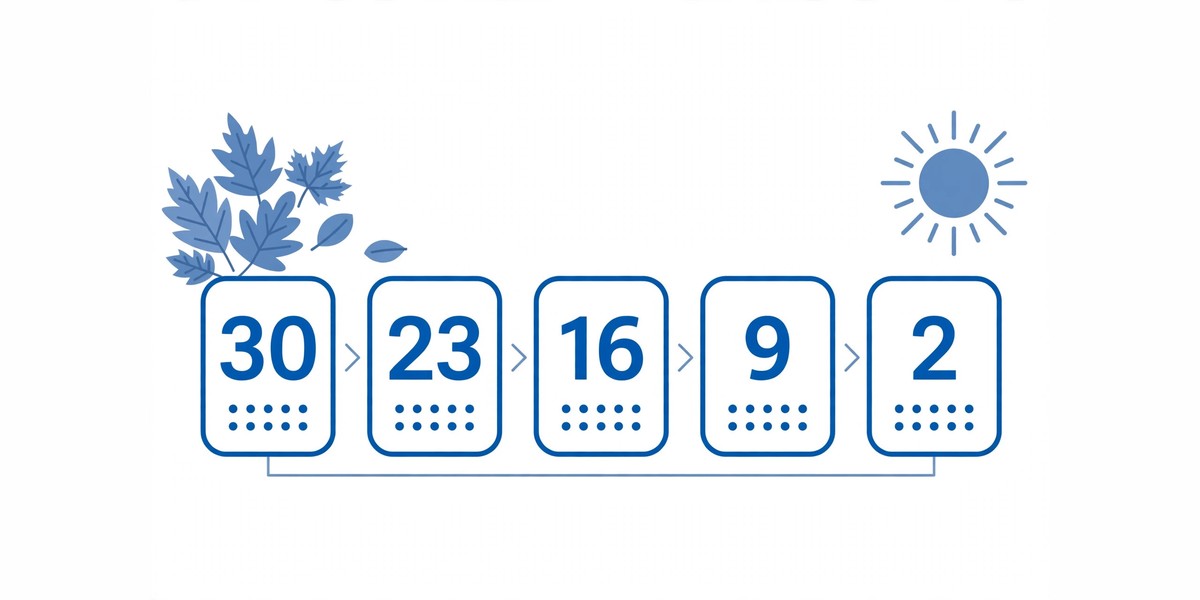
Direct answer: From October 26, 2026, there are exactly 34 weeks until summer 2027. The astronomical summer begins on June 21, 2027, which is 238 days after October 26, 2026, and 238 divided by 7 equals exactly 34. If you count meteorological summer instead, which starts on June 1, 2027, the wait is shorter, at 31 weeks and 1 day.
When Does Summer Start?
Summer has two common start dates in the United States, and the answer depends on which one you use. Astronomical summer begins on the summer solstice, the longest day of the year, which falls on June 21, 2027. Meteorological summer is simpler: it always runs from June 1 through August 31, based on temperature patterns rather than the position of the sun.
Most countdowns, travel guides, and school calendars use the astronomical date, June 21, because it marks the official first day of summer. Weather forecasters and climate records use June 1, because it makes seasonal statistics easier to compare. Either way, the difference is only 20 days, or just under 3 weeks.
| Definition | Summer 2027 Starts | Weeks From Oct 26, 2026 |
|---|---|---|
| Astronomical summer | June 21, 2027 | 34 weeks exactly |
| Meteorological summer | June 1, 2027 | 31 weeks and 1 day |
| Typical US school break | Late May to early June | About 30 to 32 weeks |
How Is the Countdown Calculated?
The math is simple once you fix the end date. Count the days from October 26, 2026 to June 21, 2027, then divide by 7. October has 5 days left after October 26, November has 30, December has 31, January has 31, February has 28 in 2027 (2027 is not a leap year), March has 31, April has 30, May has 31, and June adds 21 days. The total is 238 days, which is exactly 34 full weeks, with no leftover days.
A year is 52 weeks in a year plus 1 day, so a countdown that crosses into a new year can feel longer than it is. The trick is to count in weeks, not months, because months vary from 28 to 31 days. Weeks are always exactly 7 days, so a 34-week countdown is precise in a way a “7 and a half months” estimate is not.
- Pick your summer start date: June 21, 2027 for astronomical summer, or June 1, 2027 for meteorological summer.
- Count the days between today and that date, using a calendar or a date calculator.
- Divide the day count by 7. The whole number is the full weeks, and the remainder is the leftover days.
- For June 21, 2027 from October 26, 2026, the result is 238 days, or exactly 34 weeks.
How Many Weeks of Summer Are There?
Summer itself lasts about 13 weeks. Astronomical summer runs from June 21 to September 22, 2027, which is 93 days, or 13 weeks and 2 days. Meteorological summer runs from June 1 to August 31, which is 92 days, or 13 weeks and 1 day. Either way, summer is close to a quarter of the year, matching the roughly 13 weeks in each season.
For US families, the practical summer is the school break, which is usually 10 to 12 weeks long. Most US public schools finish in late May or early June and resume in mid to late August. That break is shorter than astronomical summer, because schools return before the autumn equinox in September.
What Can You Plan in 34 Weeks?
Thirty-four weeks is a useful planning horizon. It is long enough to book summer travel at better prices, since many US airlines and hotels open summer fares 6 to 11 months ahead. It is also enough time for a weekly savings plan: setting aside a fixed amount each week for 34 weeks builds a vacation fund without a last-minute rush.
Students can use the same window for summer programs, internships, and camp applications, many of which close in winter or early spring. Gardeners in the northern United States can plan planting around the last spring frost, which typically falls weeks before summer begins. Breaking the countdown into monthly milestones, such as booking flights by week 20 and finalizing plans by week 30, keeps a long wait from turning into a late scramble. Learn more about long time spans in our guide to how many weeks are in a century, which puts a single summer in a much bigger perspective.
Does the Countdown Change Every Year?
Yes, by a day or two. The summer solstice falls on June 20 or June 21 depending on the year, and leap years shift the count by one day. In a leap year, February has 29 days, so a countdown that crosses February gains one extra day. That is why a countdown should always be recalculated from the current date rather than reused from a previous year. For more on how the calendar handles these shifts, see our about us page for the site’s approach to calendar math.
The pattern is steady, though: from late October, summer is always about 34 weeks away, and from New Year’s Day it is about 25 weeks away. Counting in weeks keeps the estimate honest, because it avoids the uneven lengths of months.
Frequently Asked Questions
How many weeks until summer 2027?
From October 26, 2026, summer 2027 is exactly 34 weeks away, ending on the summer solstice, June 21, 2027.
When does summer start in 2027?
Astronomical summer starts on June 21, 2027, while meteorological summer starts on June 1, 2027.
How many weeks long is summer?
Summer lasts about 13 weeks, from late June to late September under the astronomical definition.
How many weeks until summer from New Year’s Day?
From January 1, 2027 to June 21, 2027 is 171 days, or 24 weeks and 3 days.
Is summer the same length every year?
Almost. Astronomical summer is 93 or 94 days depending on the year, which is 13 weeks plus 2 or 3 days.
Why do countdowns use weeks instead of months?
Weeks are always exactly 7 days, while months run 28 to 31 days, so a week count is more precise for planning.
Leave a Reply