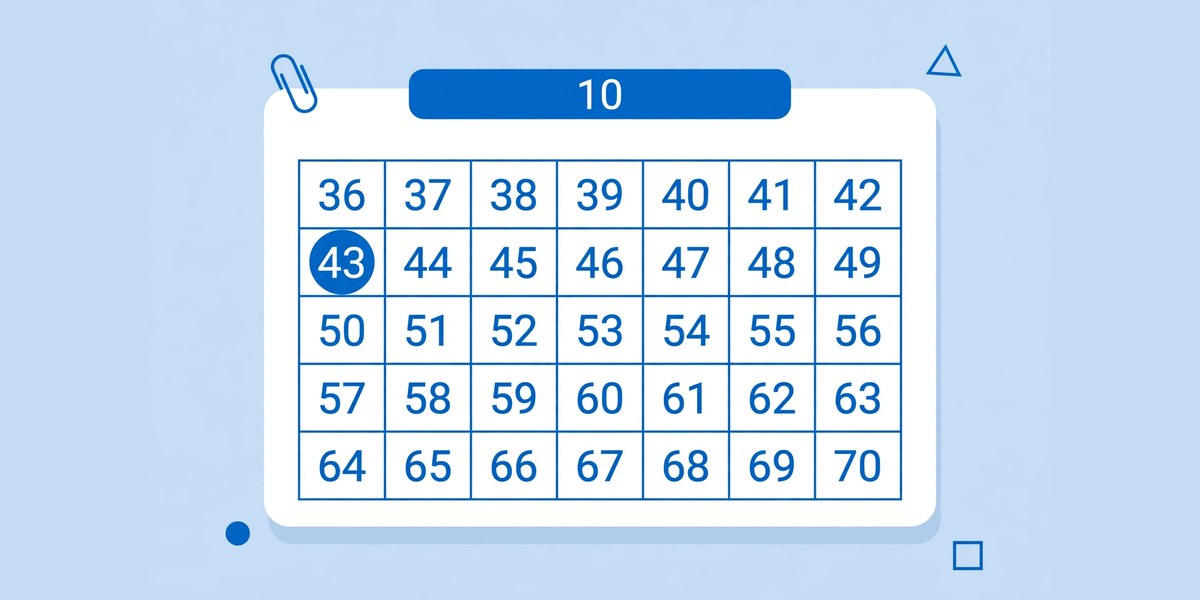
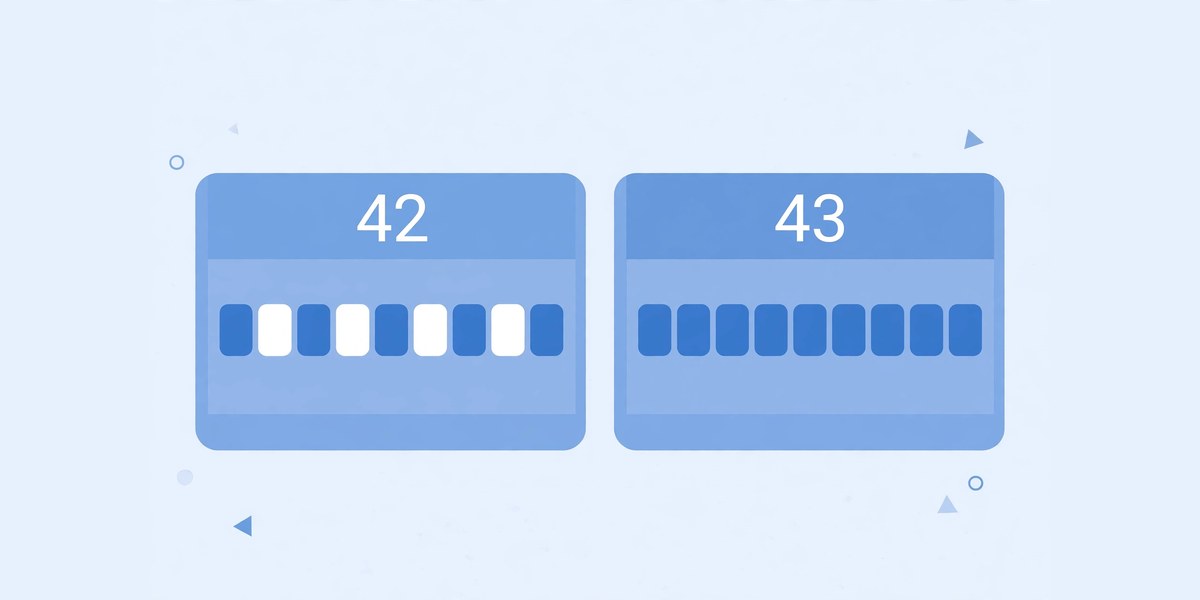
Direct answer: There is no single week number for today, because two systems compete. Under ISO week numbering, the global standard, October 23, 2026 falls in week 43. Under the common US system, where weeks start on Sunday, the same day falls in week 42. Both answers are correct. They simply follow different rules, which this guide explains with worked examples.
What Are the Two Main Week-Numbering Systems?
Week numbers count which week of the year a date falls in, from 1 up to 52 or 53. Nearly every system in use is a version of one of these two methods:
- ISO 8601 (international standard): every week starts on Monday. Week 1 is the week containing the first Thursday of January (equivalently, the week containing January 4). A year has 52 or 53 numbered weeks, and every week belongs to exactly one year. This standard is used across Europe, much of Asia, and in most business software.
- US Sunday-start: weeks begin on Sunday, matching the way most American printed calendars are laid out. The days before the first Sunday of January are counted as week 0, and week 1 starts with that first Sunday. This method appears in US calendars and in programming tools that follow the American convention.
- US Monday-start variant: the same idea with Monday as the first day, used by some planners and scheduling tools.
The two methods usually agree within one week of each other, but at the start and end of a year they can differ by a full week. That is why the count of weeks in a year is 52 in most years but 53 in years like 2026 under ISO numbering.
Which Method Does the United States Use?
The United States has no official government standard for numbering weeks, so the answer depends on context. Most Americans who see week numbers encounter them in one of these places:
- Printed and wall calendars: almost always start weeks on Sunday, so they follow the US Sunday-start convention.
- Project management software: tools like Microsoft Project and most sprint planners default to ISO 8601 week numbers because it is the international business standard.
- Payroll and HR systems: often use Sunday-start weeks, since the US work week traditionally runs Sunday through Saturday in payroll records.
- Schools and universities: typically number weeks of a semester from 1 without any year-wide standard, which is a different thing entirely.
In practice, an unspecified “week 43” in the US usually means the ISO week number, since that is what phones, spreadsheets, and business tools display. When in doubt, ask which day the week starts on. That single detail decides the numbering.
How Do You Find the Week Number of Any Date?
There are three practical ways to find a week number, from fastest to most manual:
- Check your phone or calendar app: on iPhone, go to Settings, then Calendar, and turn on Week Numbers. In Google Calendar, open Settings and set Week numbers to show. Your calendar will label every week automatically.
- Use the ISO shortcut: find the Thursday of the week containing your date. The ISO week number of your date equals the ISO week number of that Thursday, and that Thursday’s date tells you the position: the first Thursday of January is always in week 1.
- Count from January: for the US Sunday-start system, find the first Sunday of January. That Sunday begins week 1. Count forward in blocks of 7 days until you reach your date. Days before that first Sunday are week 0.
Here is a worked example. Take July 4, 2026, US Independence Day, which falls on a Saturday. Under ISO numbering it sits in week 27. Under the US Sunday-start system it sits in week 26, because the American count started a day later at the beginning of the year.
Why Do the Two Systems Give Different Answers?
The gap appears because the two systems define week 1 differently. Walk through January 2026 to see it:
| Date in January 2026 | Day of Week | ISO Week | US Sunday-Start Week |
|---|---|---|---|
| January 1 | Thursday | Week 1 | Week 0 |
| January 2 | Friday | Week 1 | Week 0 |
| January 3 | Saturday | Week 1 | Week 0 |
| January 4 | Sunday | Week 1 | Week 1 |
| January 5 | Monday | Week 2 | Week 1 |
January 1, 2026 is a Thursday, so ISO numbering places it in week 1 immediately. The US system waits for the first Sunday, January 4, leaving the first three days in week 0, and the two counts then run a week apart for most of the year. A similar split hits year-end: December 31, 2026 lands in ISO week 53 but US week 52.
Note that 2026 has 53 ISO weeks: a year gains a 53rd ISO week when January 1 falls on a Thursday, or on a Wednesday in a leap year. Months create a similar rounding puzzle; see how many weeks are in 12 months for the full breakdown.
Where Are Week Numbers Actually Used?
Week numbers look like trivia until you notice how much of American working life runs on them:
- Project planning: teams schedule milestones as “week 45” or “week 12” because week numbers stay fixed while dates shift across years.
- Manufacturing and logistics: date codes on parts and packaging often use the ISO week number, such as “2643” for week 43 of 2026.
- Retail planning: US retailers plan seasons around a 4-5-4 calendar built from 52 or 53 numbered weeks.
- Payroll: biweekly schedules divide the year into 26 pay weeks, which is why some years produce a surprise 27th paycheck.
- School calendars: many districts label instructional weeks, making it easy to say “testing happens in week 30.”
Because week numbers cross month boundaries cleanly, they often beat months for planning: a project running “weeks 40 through 48” is exactly 9 weeks long, while “October through mid-November” needs a calendar to decode.
Frequently Asked Questions
What week number is it right now?
As of October 23, 2026, it is ISO week 43 and US Sunday-start week 42. Week numbers change every Monday (ISO) or Sunday (US), so check a current calendar or your phone’s week-number setting for the latest value.
Do all years have the same number of weeks?
No. Most years have 52 ISO weeks, but some, including 2026, have 53. The US Sunday-start system counts from week 0 or week 1 up to week 52. Neither system ever produces a clean 52 for every year, because 365 days do not divide evenly by 7.
Why does my wall calendar show a different week number than my phone?
Your wall calendar almost certainly starts weeks on Sunday, while your phone probably uses ISO 8601 Monday-start numbering. Change the “week starts on” setting in your calendar app to match and the numbers will agree.
What counts as week 1 of the year?
In ISO numbering, week 1 is the week containing the first Thursday of January (always containing January 4). In the US Sunday-start system, week 1 begins on the first Sunday of January, and any earlier days belong to week 0.
How many weeks are left in the year?
From October 23, 2026, there are 69 days left, which is 9 weeks and 6 days. In ISO terms, 2026 runs through week 53, so 10 numbered weeks remain after week 43, with the last one only partly in 2026.
Is there really a week 53?
Yes. In ISO numbering, years that start on a Thursday (like 2026) contain a week 53, running from Monday December 28 through Thursday December 31. It is a short week, but it is numbered and real, and planning systems use it.
Want to know more about how this site tracks calendar facts? Visit our about us page.
Leave a Reply