
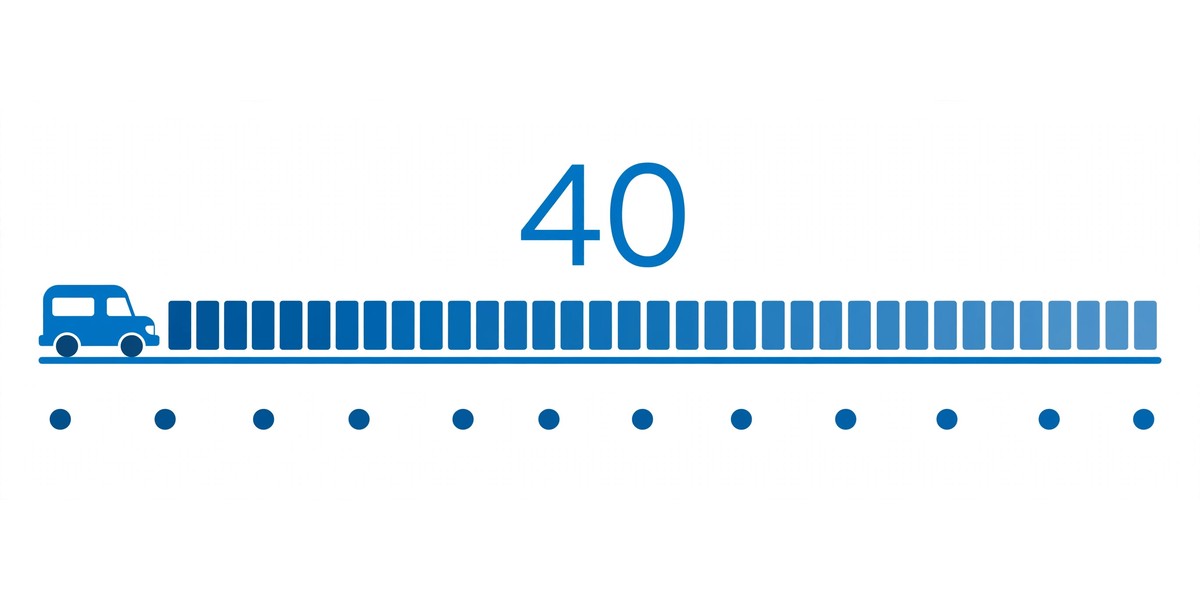
Direct answer: A typical US school year contains 36 instructional weeks of five school days each, based on the standard 180-day requirement used by most states. Measured on the calendar from the first day of school in mid-August to the last day in June, the same school year spans about 40 to 43 calendar weeks, with the difference made up by weekends, holidays, and school breaks.
Whether the answer is 36 weeks or 42 weeks depends on what you are counting. School administrators, teachers, and parents often use the word “weeks” to mean different things: weeks of actual instruction, weeks the building is open, or weeks on the calendar between the first and last day. Understanding which count you need makes planning simpler.
Why Are There Two Different Answers?
The 36-week answer counts only instructional days, the days when students are in class learning. The 40-to-43-week answer counts every calendar week between the start and end of the school year, including weekends, Thanksgiving break, winter break, and spring break. Both answers describe the same school year; they just measure different things.
This distinction matters in practice. A district planning its curriculum thinks in instructional weeks, because those are the weeks available for teaching. A family planning childcare thinks in calendar weeks, because that is the full stretch of time the school year occupies on the family calendar.
How Many Instructional Weeks Are in a School Year?
Most US states require roughly 180 instructional days per school year, though the exact number varies by state. Instructional days exclude weekends and holidays. The math is straightforward:
| Instructional days | School days per week | Instructional weeks |
|---|---|---|
| 180 | 5 | 36 |
| 175 | 5 | 35 |
| 185 | 5 | 37 |
So the standard 180-day school year equals exactly 36 five-day weeks of instruction. States that require fewer days, such as some with 170-day calendars, have about 34 instructional weeks. States that require more, such as a few with 185-day calendars, have about 37 instructional weeks. The common range across the country is 34 to 38 instructional weeks, with 36 as the typical figure.
How Many Calendar Weeks Does a School Year Span?
On the calendar, a traditional US school year starts in mid-to-late August and ends in late May or early-to-mid June. That span covers roughly 280 to 300 days, or about 40 to 43 calendar weeks. Here are two worked examples using the 2026-2027 school year:
- Example 1: A district starts on Monday, August 17, 2026, and ends on Friday, June 11, 2027. That is 298 days, which equals about 42.6 calendar weeks. Within those weeks, students attend 180 instructional days, or 36 instructional weeks.
- Example 2: A district starts on Wednesday, August 26, 2026, and ends on Friday, June 4, 2027. That is 282 days, which equals about 40.3 calendar weeks. Again, the 180 instructional days inside that span equal 36 instructional weeks.
The gap between 36 instructional weeks and 40 to 43 calendar weeks is filled with weekends (two non-school days per week by design) plus the major breaks of the American school calendar.
What Breaks Reduce the Instructional Week Count?
A school year rarely delivers all 180 days in one uninterrupted stretch. The typical US school calendar includes several scheduled breaks, plus unplanned closures. Each of these reduces the weeks available for instruction:
| Break or closure | Typical timing | School days lost |
|---|---|---|
| Labor Day | Early September | 1 |
| Thanksgiving break | Late November | 3 to 5 |
| Winter break | Late December to early January | 8 to 10 |
| Martin Luther King Jr. Day | Mid January | 1 |
| Presidents Day | Mid February | 1 |
| Spring break | March or April | 5 |
| Memorial Day | Late May | 1 |
Snow days and other weather closures add more lost days, especially in northern states. Districts typically build a few makeup days into the calendar so that they still reach the required instructional total. Teacher workdays, parent-teacher conference days, and early dismissal days can also count differently under state rules, which is one reason neighboring districts can report slightly different week counts.
How Do Year-Round Schools Change the Math?
Year-round schools cover the same ground in a different pattern. Students still attend roughly 180 instructional days, which is still 36 instructional weeks. The difference is that those 36 weeks are spread across all 12 months instead of being concentrated between August and June.
A common year-round schedule runs nine weeks of school followed by three weeks off, repeating through the year. Under that pattern, the calendar-year footprint is about 52 weeks, but the instructional count is unchanged: 36 weeks of five school days. Shorter, more frequent breaks replace the single long summer break.
Year-round calendars do not reduce summer learning loss for every student in every study, but they do change how the weeks are distributed. The total of 36 instructional weeks remains the anchor number.
How Does the School Year Fit Inside the Full Calendar Year?
A school year is a portion of a calendar year, so its week counts should fit inside the yearly totals. Just as a standard calendar year contains a little more than 52 weeks in a year, a leap year contains about 52 weeks plus two days, and a school year occupies 36 to 40 of those weeks depending on how you count.
Another way to see it: 180 instructional days is about 49 percent of the 365 days in a standard year. When you add the weekends and breaks that fall inside the August-to-June window, the school year claims roughly 80 percent of the calendar. The remaining summer weeks, about 10 to 12 weeks, are the familiar summer break.
Different countries label their school weeks differently, and the same is true of calendar weeks worldwide. To see how the global standard handles week numbering, read our guide to ISO week numbering, which explains the Monday-start system used in business and logistics around the world.
If you want to know more about how we research and verify calendar facts, learn more about us and our approach to accurate, plain-language guides.
Frequently Asked Questions
How many weeks is 180 school days?
180 school days equals 36 weeks of five school days each. That is the standard instructional count for a typical US school year.
Why do people say a school year is 40 weeks long?
The 40-week figure counts calendar weeks from the first day of school in August to the last day in June, including weekends and holiday breaks. The instructional count inside that span is 36 weeks.
Do all states have the same number of school weeks?
No. Most states require about 180 instructional days, but some require fewer and a few require more, so instructional weeks range from about 34 to 38 across the country. Local district calendars add further variation.
How many weeks is the school summer break?
The traditional US summer break runs about 10 to 12 weeks, typically from early June to mid-August. Year-round schools replace it with shorter breaks spread through the year.
Do snow days reduce the number of school weeks?
Snow days reduce instructional days, but districts usually add makeup days to reach the required total. The final instructional week count normally stays at the state requirement.
Is the school year the same length every year?
Not exactly. The start and end dates shift slightly from year to year, so the calendar span can range from about 40 to 43 weeks. The required number of instructional days, usually 180, stays the same.
Leave a Reply