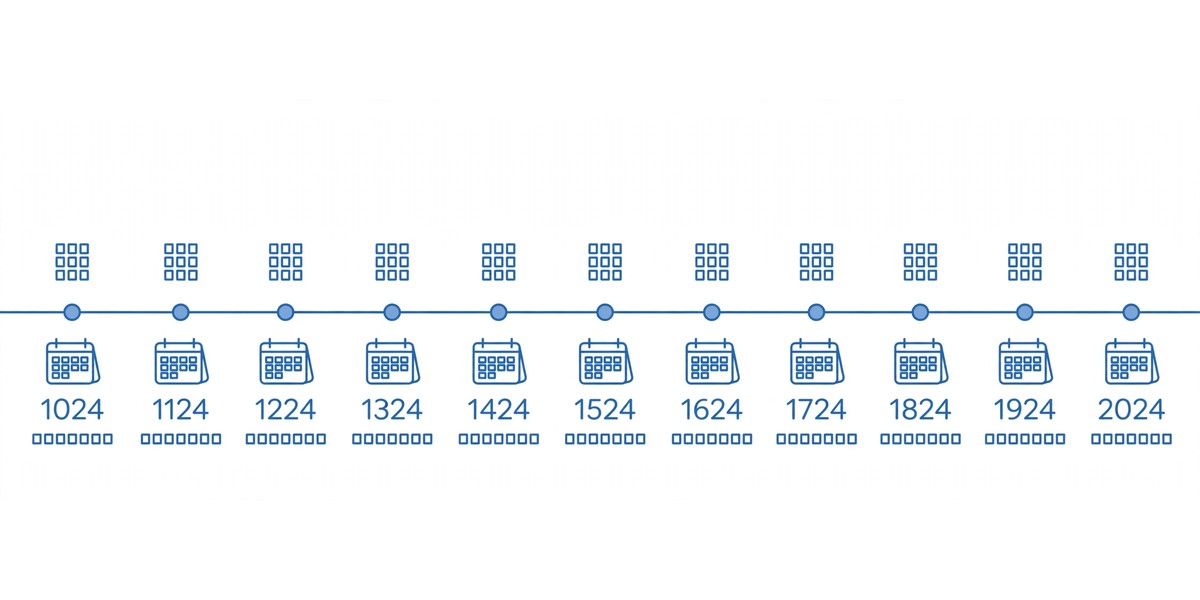
Direct answer: A millennium contains 52,177.5 weeks on average. That figure comes from the average Gregorian year of 365.2425 days multiplied by 1,000 years, then divided by 7. A specific millennium varies slightly: the current one, years 2001 to 3000, holds 365,242 days, which is 52,177 weeks plus 3 days, because it contains 242 leap years.
What Is a Millennium?
A millennium is a period of 1,000 years. The current millennium, the third millennium of the Common Era, runs from January 1, 2001 to December 31, 3000. Many people casually count 2000 to 2999 instead, but by the standard calendar count, a new millennium begins in a year ending in 001, not 000. Either way, the span is 1,000 years, and the week count differs only by a day or two depending on which exact years are included.
Millenniums matter because they expose the slow drift of the calendar. A single year is 52 weeks plus 1 or 2 leftover days, and over 1,000 years those leftovers add up to roughly half a week of extra time beyond 52,177 full weeks.
How Many Weeks Are in 1,000 Years?
The calculation has three steps. First, count the days: 1,000 common years of 365 days give 365,000 days, plus one extra day per leap year. Second, count the leap years using the Gregorian rules: a year is a leap year if it is divisible by 4, except century years, which must also be divisible by 400. Third, divide the total days by 7.
| Step | Current Millennium (2001-3000) | Result |
|---|---|---|
| Common-year days | 1,000 x 365 | 365,000 days |
| Leap years | 242 leap days | 365,242 days total |
| Divide by 7 | 365,242 / 7 | 52,177.43 weeks |
The average Gregorian millennium is slightly longer: 365.2425 days per year times 1,000 years equals 365,242.5 days, or exactly 52,177.5 weeks. The half-week in that average is why no single millennium lands exactly on it. This same leftover-day logic explains the familiar fact that a single year holds 52 weeks in a year plus 1 or 2 extra days.
Why Does the Count Vary Between Millenniums?
The Gregorian leap-year rules create small differences between millenniums, because century years are skipped unless they are divisible by 400. A millennium that contains three years divisible by 400 gains an extra leap day compared to one that contains only two. Here are three sample millenniums:
| Millennium | Leap Years | Total Days | Exact Weeks |
|---|---|---|---|
| Years 1-1000 | 242 | 365,242 | 52,177.43 |
| Years 1001-2000 | 243 | 365,243 | 52,177.57 |
| Years 2001-3000 | 242 | 365,242 | 52,177.43 |
The second millennium holds one extra day because it includes three years divisible by 400 (1200, 1600, and 2000), while the others include only two. Across any long stretch, the average always settles back to 52,177.5 weeks per millennium.
How Many Weeks Are in Other Long Spans?
The same method scales to any long period. Using the average Gregorian year of 365.2425 days:
- 1 decade (10 years): 3,652.425 days, or 521.775 weeks.
- 1 century (100 years): 36,524.25 days, or 5,217.75 weeks.
- 1 millennium (1,000 years): 365,242.5 days, or 52,177.5 weeks.
- 10,000 years: 3,652,425 days, or 521,775 weeks.
For everyday planning, weeks and months are far more useful units than millenniums. If you are choosing between them for a project or a habit, our comparison of weeks vs months for planning breaks down when each unit works best. Questions about these calculations can also go through our about page.
What Fits Inside a Millennium?
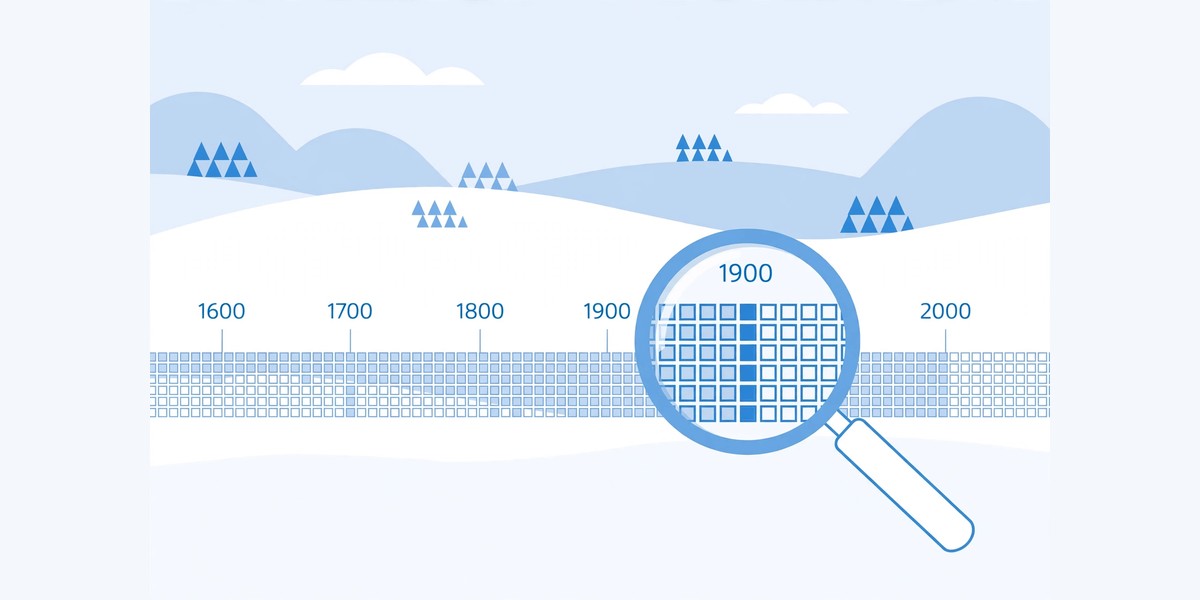
A millennium is hard to picture, so here are some concrete quantities it contains:
- Weekends: about 52,177 weekends, or roughly 104,355 weekend days.
- Sundays: about 52,177 Sundays, one per week.
- Full moons: about 12,369 full moons, since a lunar cycle averages 29.53 days.
- US presidential terms: 250 four-year terms would fit inside a millennium.
- Leap days: 242 or 243 leap days, depending on the millennium.
Put another way, if you lived one week at a time, you would need more than 52,000 lifetimes of an average human lifespan to fill a single millennium with weekly journal entries.
How Many Weeks Are in a Millennium in Other Calendars?
The 52,177.5 figure belongs to the Gregorian calendar, the system used in the United States and most of the world today. Other calendars define the year differently, so their millenniums hold different week counts:
| Calendar | Average Year Length | Days per 1,000 Years | Weeks per Millennium |
|---|---|---|---|
| Gregorian | 365.2425 days | 365,242.5 | 52,177.5 |
| Julian | 365.25 days | 365,250 | 52,178.57 |
| Islamic (lunar) | 354.367 days | 354,367 | 50,623.86 |
The Julian calendar, used in Europe before the Gregorian reform of 1582, adds a leap day every 4 years without exception, so its millennium runs about 7.5 days longer than a Gregorian one. The Islamic calendar is lunar, so its year is about 11 days shorter than a solar year, and its millennium holds roughly 1,554 fewer weeks. These differences are a reminder that a “millennium” is only as exact as the calendar used to count it. The week itself, though, is the same everywhere: 7 days, in every calendar system.
Frequently Asked Questions
How many weeks are in 1,000 years?
On average, 1,000 years contain 52,177.5 weeks. A specific millennium, such as 2001 to 3000, contains 52,177 weeks plus 3 days.
How many days are in a millennium?
A millennium contains 365,242 or 365,243 days, depending on how many leap years it includes. The average is 365,242.5 days.
How many leap years are in a millennium?
Usually 242, but a millennium that includes three years divisible by 400, such as 1001 to 2000, contains 243 leap years.
When does the current millennium end?
The third millennium ends on December 31, 3000. The fourth millennium begins on January 1, 3001.
How many weeks are in a century?
A century averages 5,217.75 weeks, based on the average Gregorian year of 365.2425 days. That is exactly one-tenth of a millennium.
Why is the average not a whole number of weeks?
Because a year is 365.2425 days, not a multiple of 7. The fractional days accumulate over 1,000 years into an extra half-week beyond 52,177 full weeks.
Leave a Reply