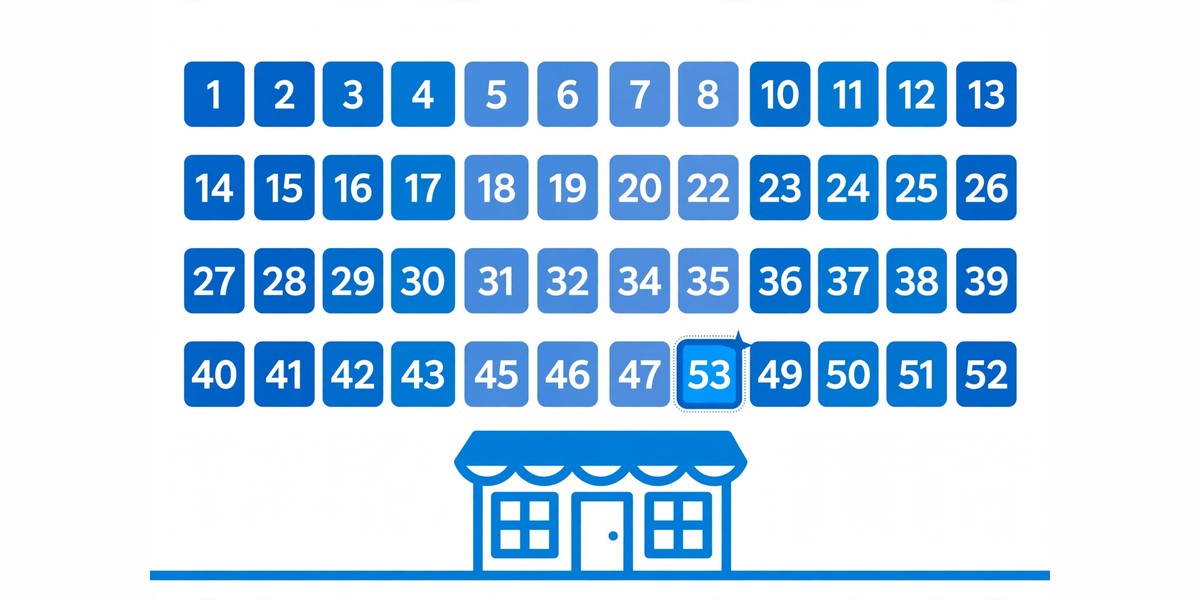
A 52-53 week year is a retail fiscal year that contains 53 weeks instead of the usual 52. US retailers using the NRF 4-5-4 calendar add the extra week about every five to six years so that each fiscal quarter keeps the same number of weeks. The 53rd week adds seven selling days, which lifts reported sales and expenses for that year and makes year-over-year comparisons tricky.
What Is the 4-5-4 Retail Calendar?
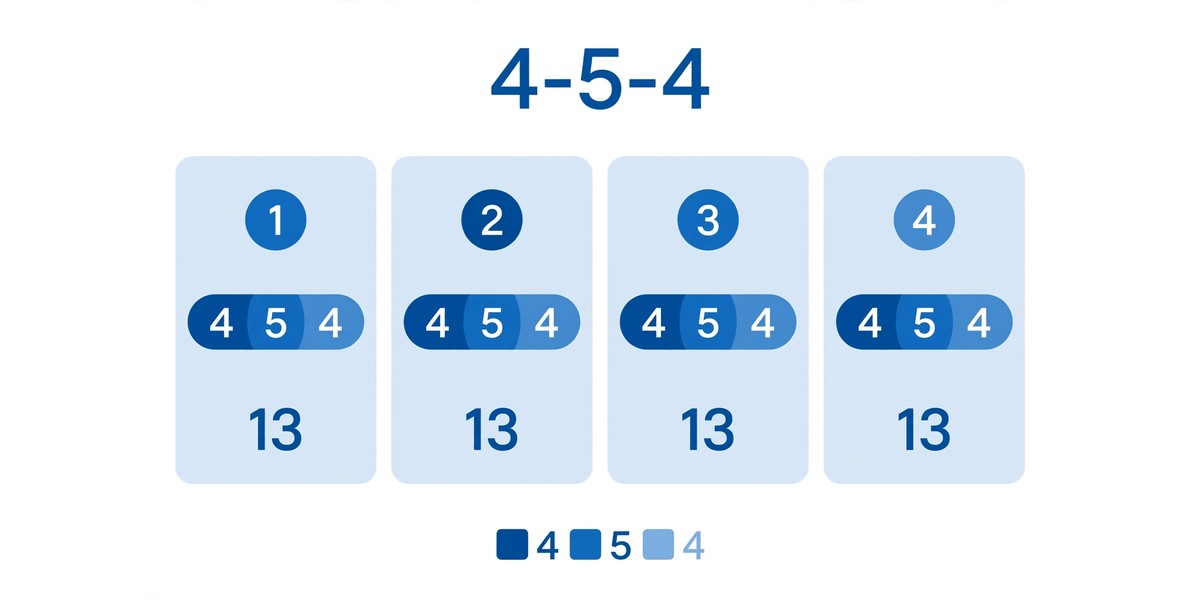
The 4-5-4 calendar is a retail accounting calendar maintained by the National Retail Federation (NRF). Instead of following the Gregorian calendar’s uneven months, it divides the fiscal year into quarters of exactly 13 weeks, with each quarter split into months of 4 weeks, 5 weeks, and 4 weeks. That pattern gives 52 weeks per year, with retail weeks running Sunday through Saturday.
This structure exists for one reason: comparability. On a normal calendar, February has 28 days and one quarter has 92 days while another has 90, so sales bounce around for calendar reasons alone. On the 4-5-4 calendar, every quarter has the same 91 days, and every week ends on Saturday.
| Quarter | Months | Weeks |
|---|---|---|
| Q1 | February, March, April | 4 + 5 + 4 = 13 |
| Q2 | May, June, July | 4 + 5 + 4 = 13 |
| Q3 | August, September, October | 4 + 5 + 4 = 13 |
| Q4 | November, December, January | 4 + 5 + 4 = 13 |
Retail fiscal years end on the Saturday closest to January 31, which captures the full holiday season plus January clearance in the fourth quarter. Because weeks are the calendar’s basic unit, the retail year is measured in weeks per year, just like the standard 52 weeks in a year used everywhere else.
Why Do Retail Years Sometimes Need a 53rd Week?
Fifty-two weeks contain only 364 days, but a calendar year has 365 days (366 in a leap year). That leaves 1 or 2 days unaccounted for every year. Over time the leftover days accumulate, and the fiscal year-end drifts away from its anchor near January 31.
The fix is the 53rd week. About every five to six years, the NRF calendar inserts a 53rd week, usually tacked onto the end of the fiscal year in January. This resets the drift and keeps the year-end Saturday close to January 31. Without this correction, fiscal quarters would slowly slide out of alignment with the seasons and with each other.
It is the same basic problem as leap years, which add a day to keep the calendar aligned with the solar year. Retailers just solve it with a whole extra week instead of a day, because their calendar is built from weeks. A related explainer on how many weeks are in a pregnancy shows another system where the week count depends on the counting convention.
How Often Do 53-Week Years Happen?
A 53rd week is added roughly every five to six years. Under the NRF calendar, recent 53-week retail fiscal years include:
| Fiscal year | Year ended | Weeks |
|---|---|---|
| 2012 | Saturday, February 4, 2012 | 53 |
| 2017 | Saturday, February 3, 2018 | 53 |
| 2023 | Saturday, February 3, 2024 | 53 |
Between these years, the fiscal year-end Saturday bounced around late January and early February, drifting until the accumulated leftover days justified another 53rd week. The 2017 and 2023 years are the ones most US shoppers would have seen mentioned in earnings reports, because big chains disclose the extra week’s effect on their results.
Which Companies Use the 52-53 Week Calendar?
Many of the largest US retailers report on a 52-53 week fiscal year, including:
- Target, which disclosed a 53rd week in its 2017 and 2023 fiscal years.
- Costco, whose fiscal 2023 contained 53 weeks and ended September 3, 2023.
- Walmart, which has reported 53-week years on the same roughly five-to-six-year rhythm.
- Home Depot, Lowe’s, Macy’s, and Dollar Tree, which all use the 4-5-4 structure or a close variant.
Not every retailer follows the NRF calendar exactly. Some use their own week-based year anchored to a different end date, and some stick to the calendar year. But for the chains that do use it, the 52-53 week designation appears right in the 10-K annual report, so investors know the year had an unusual number of selling weeks.
If you are curious about how this site counts and explains calendar weeks, the contact page has a way to send questions about week-based topics.
How Does the 53rd Week Affect Sales and Earnings?
One extra week means about 1.9 percent more selling days (1 extra week out of 53, or roughly 7 out of 372 days). That is enough to move the headline numbers:
- Revenue rises. Seven more days of sales inflate total revenue compared with a 52-week year.
- Costs rise too. Payroll, rent allocated by week, and operating expenses all cover an extra week.
- Comparisons distort. A 53-week year compared directly with a 52-week year looks stronger than the underlying business really is.
Because of this, retailers routinely report results “excluding the 53rd week” alongside the official numbers. Analysts strip the extra week out before judging growth, and management teams explain how much of a sales increase came from the calendar rather than from customer demand.
The effect can cut the other way, too. When a 53-week year is followed by a normal 52-week year, the next year’s growth rate gets a built-in headwind of nearly 2 percent. Investors who ignore the calendar math can misread the trend.
Is a 53-Week Retail Year the Same as an ISO 53-Week Year?
No, they are different systems solving different problems. The ISO week-date system (ISO 8601) assigns 53 weeks to a calendar year when January 1 is a Thursday, or a Wednesday in a leap year. That rule is about numbering weeks of the Gregorian calendar.
The retail 53rd week is about fiscal accounting: keeping the year-end Saturday near January 31 on a week-based calendar. The two systems can disagree. A year can have 53 ISO weeks but 52 retail weeks, or the reverse. Retailers care about the NRF version, because that is the one that changes their reported selling days.
Both exist because 365 is not divisible by 7. Any system built on whole weeks eventually needs an extra one.
Frequently Asked Questions
When was the last 53-week retail year?
Fiscal 2023, which ended on Saturday, February 3, 2024. Major chains including Target and Costco reported a 53rd week that year, and it added roughly 1.9 percent more selling days.
When is the next 53-week year?
On the roughly five-to-six-year rhythm of the NRF calendar, the next 53-week year is expected around fiscal 2028 or 2029. The NRF publishes the official calendar each year, so the exact year-end date is confirmed in advance.
Do all US retailers use the 4-5-4 calendar?
No. Many large chains do, but some retailers use the calendar year or a custom fiscal year. Companies that use a 52-53 week year disclose it in their annual reports.
Does the 53rd week help or hurt reported profits?
It usually boosts reported revenue because of the extra selling days, but it also adds a week of costs. Analysts compare results with the 53rd week removed to judge real performance.
Why does the retail year end near January 31?
Ending the fiscal year on the Saturday closest to January 31 puts the entire holiday season and January clearance sales into the fourth quarter, giving a clean annual picture of the most important selling period.
How is a 53-week year different from a leap year?
A leap year adds one day to keep the Gregorian calendar aligned with the sun. A 53-week retail year adds seven days to keep a week-based fiscal calendar aligned with its January 31 anchor.
Leave a Reply