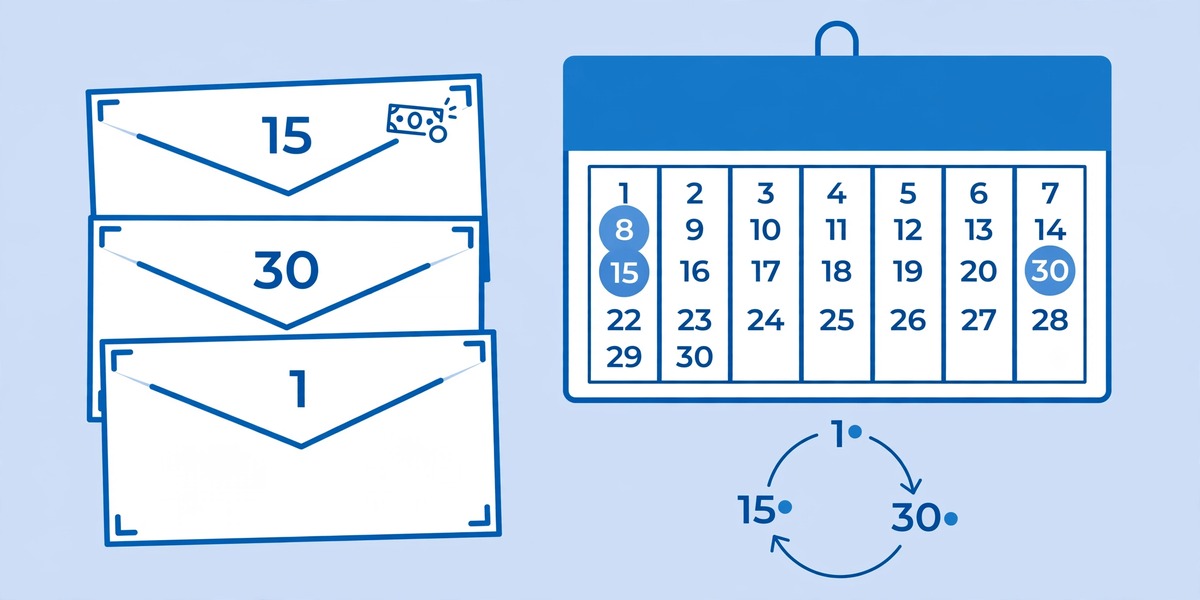
Biweekly: 26. Weekly: 52. Semimonthly: 24. Monthly: 12. The number of pay periods in a year depends entirely on your employer’s pay schedule, and every schedule is anchored to the fact that a standard year has 52 weeks in a year plus one extra day (two in a leap year).
How many pay periods are in a year?
The answer depends on the pay schedule your employer uses:
- Weekly pay: 52 pay periods per year (53 in years when your payday weekday occurs 53 times)
- Biweekly pay: 26 pay periods per year (27 in years when your payday weekday occurs 53 times)
- Semimonthly pay: 24 pay periods per year, always
- Monthly pay: 12 pay periods per year, always
Biweekly is the most common schedule in the United States. Roughly 43 percent of US private employers use it, and federal government employees are paid biweekly as well.
What is a pay period?
A pay period is the repeating block of time over which an employer calculates and pays employee wages. It always ends on a payday. If you are paid biweekly on Fridays, each pay period covers two calendar weeks ending on a Friday, and you receive 26 paychecks per year.
A biweekly schedule produces 26 paydays, while a semimonthly schedule produces 24, and that two-check difference explains most payroll confusion.
Pay schedule comparison table
| Schedule | Pay periods per year | Paychecks | Typical payday |
|---|---|---|---|
| Weekly | 52 (53 in some years) | 52 | Friday |
| Biweekly | 26 (27 in some years) | 26 | Friday |
| Semimonthly | 24 | 24 | 15th and last day of month |
| Monthly | 12 | 12 | Last day of month |
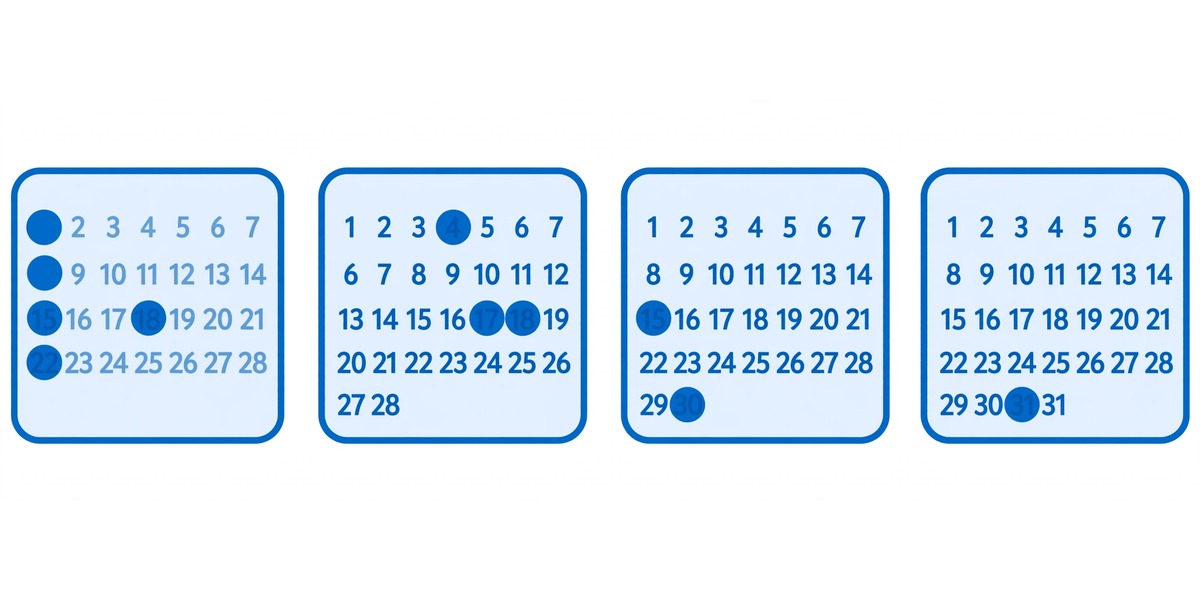
How does each pay schedule work?
Weekly pay: 52 pay periods
With weekly pay, you receive a paycheck every week, for 52 pay periods in a standard year. Because 365 days equal 52 weeks plus 1 day, a year contains 53 of one weekday. In any year where your payday weekday occurs 53 times, you receive a 53rd paycheck. For example, 2026 has 53 Thursdays, so employees paid weekly on Thursdays get 53 checks that year.
Weekly pay is common in hourly-wage industries such as construction, food service, and retail.
Biweekly pay: 26 pay periods
Biweekly pay delivers a paycheck every two weeks, producing 26 pay periods in a standard year. Like weekly pay, it occasionally produces 27: in any year where your payday weekday occurs 53 times, you get an extra check. With a Thursday payday, 2026 is a 27-pay-period year because 2026 starts on Thursday, January 1, ends on Thursday, December 31, and contains 53 Thursdays. With a Friday payday, 2026 has the usual 26.
Because 26 pay periods split unevenly across 12 months, two months each year contain three biweekly paychecks instead of two. These are often called “third paycheck months.”
Semimonthly pay: 24 pay periods
Semimonthly pay divides each month in half, typically paying on the 15th and the last day of the month. That is 2 checks per month times 12 months, or 24 pay periods, with no variation from year to year. Unlike biweekly pay, semimonthly pay periods are tied to the calendar, so the number of days worked in each period can vary from 13 to 16.
Monthly pay: 12 pay periods
Monthly pay means one paycheck per month, usually on the last business day, for exactly 12 pay periods per year. It is common for salaried office and executive roles.
Which pay periods have extra paychecks in 2026?
Whether 2026 gives you an extra paycheck depends on your schedule and your payday weekday:
- Weekly, Thursday payday: 53 pay periods (2026 has 53 Thursdays)
- Weekly, Friday payday: 52 pay periods (2026 has 52 Fridays)
- Biweekly, Thursday payday: 27 pay periods
- Biweekly, Friday payday: 26 pay periods
- Semimonthly or monthly: 24 or 12, unchanged
Verify your own situation with a simple test: count how many times your payday weekday occurs in the year. A 365-day year always contains 53 of exactly one weekday and 52 of the other six. Weekly and biweekly schedules anchored to that weekday gain the extra period.
Why does the number of pay periods matter?
The pay schedule changes how much money lands in your account each time and how often. A worker earning $52,000 per year receives:
- Weekly: $1,000 per check (52 checks)
- Biweekly: $2,000 per check (26 checks)
- Semimonthly: $2,166.67 per check (24 checks)
- Monthly: $4,333.33 per check (12 checks)
The annual total is identical, but the rhythm is not. Here is how the schedule affects everyday financial life:
- Budgeting: Weekly and biweekly schedules create occasional extra-check months. Planning around them prevents the money from simply disappearing into spending.
- Benefits and deductions: Insurance premiums and retirement contributions are usually divided by the number of pay periods, so each deduction is smaller on a weekly schedule and larger on a monthly one.
- Tax withholding: Withholding tables assume your schedule. An extra pay period in a 27-check year can slightly change the total withheld.
- Overtime and bonuses: Hourly overtime and quarterly bonuses are applied per pay period, so the schedule determines which period a bonus falls into.
- Comparing job offers: A salary quoted as “per pay period” is meaningless without the schedule. Always multiply by the pay periods per year to compare offers fairly.
How do pay periods relate to the calendar year?
Pay periods follow the same calendar arithmetic as everything else. A standard year has 52 working weeks plus one weekday that belongs to a 53rd week. That extra day is what produces 53-period and 27-period years.
Leap years add one more day (52 weeks plus 2 days), which shifts which weekday occurs 53 times and can move extra-check years to different weekdays. Payroll calendars in the United States typically follow this math exactly, with holidays such as Thanksgiving, Christmas Day, and New Year’s Day moving a payday to the nearest business day when the two collide.
If you are curious about the calendar mechanics behind all of this, our guide on how many weeks are in a year explains the 52-weeks-plus-1-day structure in detail, and our about us page describes why we build these reference guides.
Frequently Asked Questions
How many biweekly pay periods are in 2026?
With a Thursday payday, 2026 has 27 biweekly pay periods because the year starts and ends on a Thursday, giving 53 Thursdays. With a Friday payday, 2026 has the standard 26.
Which months have three biweekly paychecks in 2026?
The exact months depend on your employer’s payday schedule. With biweekly Friday paydays, the three-paycheck months in a year are the two months in which a third Friday payday lands, and payroll providers publish the schedule each year. Ask your payroll department or check your 2026 payroll calendar for the exact months.
Is 27 pay periods better than 26?
It is not extra money: your annual salary stays the same, and each paycheck is slightly smaller because it is divided into more periods. The benefit is cash flow, since 27-period years feel like you get a bonus check in the months with three paydays.
How many pay periods are in a semimonthly payroll year?
Always 24. Semimonthly pay is tied to the calendar (twice per month), so it never gains or loses a period the way weekly and biweekly schedules can.
Do federal employees get 27 pay periods some years?
Yes. Federal employees are paid biweekly, so in years where their payday weekday occurs 53 times, they receive 27 paychecks instead of 26, with each check slightly smaller to keep the annual salary unchanged.
How do I calculate my paycheck from my salary?
Divide your annual gross salary by the number of pay periods in your schedule: 52 for weekly, 26 for biweekly, 24 for semimonthly, or 12 for monthly. Then subtract taxes and deductions, which are also calculated per pay period.
Leave a Reply