
Short answer: A typical US full-time worker has about 50 working weeks in a year. A calendar year always contains 52 weeks in a year, but once weekends, federal holidays, and vacation days are subtracted, the real number of workable weeks drops to roughly 48 to 50 depending on the employer and the calendar.
Why does the number of working weeks matter?
The count of working weeks is the backbone of American payroll math. Employers use it to convert salaries into hourly rates, plan project timelines, and budget paid time off. A difference of even one week changes an employee’s effective hourly wage.
It also matters for financial planning. Knowing how many weeks you actually work helps you compare job offers, set savings goals, and understand how pay periods line up with your real schedule across the year.
How many weekdays are in a year?
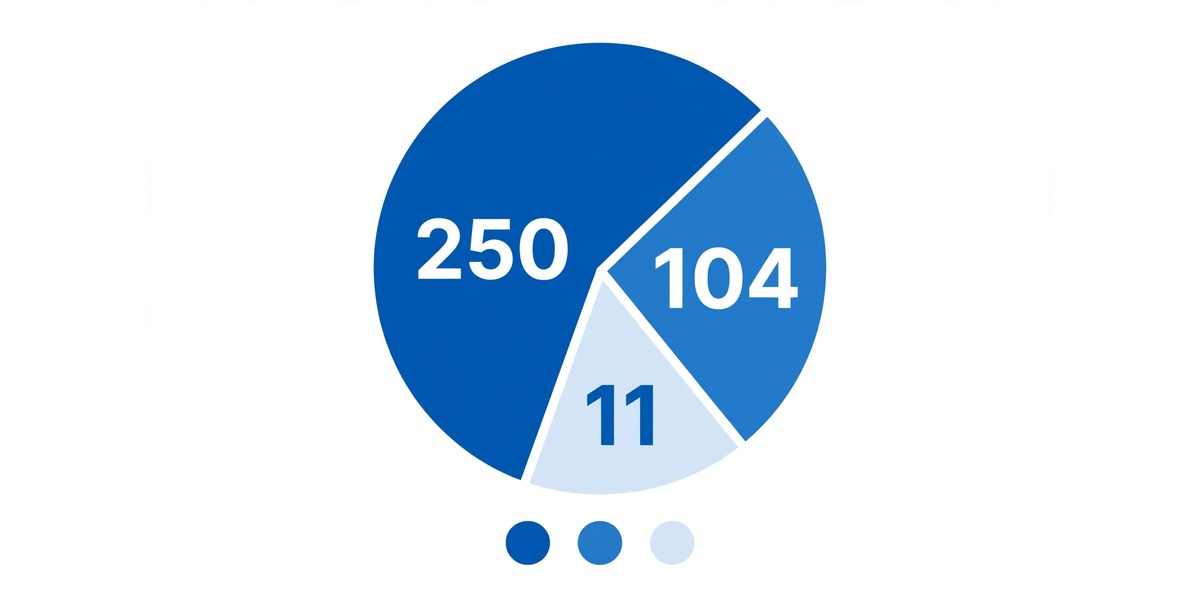
A standard year has 365 days, which equals 52 weeks plus 1 extra day. Weekends remove 104 of those days, leaving 261 weekdays in most standard years, or 260 when the extra day falls on a weekend.
The year 2026 is not a leap year. It begins on Thursday, January 1, and ends on Thursday, December 31. Because the extra day (Thursday) is a weekday, 2026 contains 260 weekdays and 105 weekend days, made up of 53 Saturdays and 52 Sundays.
Leap years behave slightly differently. A leap year has 366 days, or 52 weeks plus 2 extra days, so it contains 262 weekdays. The years 2024 and 2028 both fall into this category.
| Year type | Total days | Weekdays | Weekend days | Working weeks (before holidays) |
|---|---|---|---|---|
| Standard year (2026) | 365 | 260 | 105 | 52.0 |
| Standard year (typical) | 365 | 260-261 | 104-105 | 52.0-52.2 |
| Leap year (2028) | 366 | 262 | 104 | 52.4 |
How do federal holidays change the count?
Federal holidays fall on weekdays, and most full-time US workers get them as paid days off. In 2026, all 11 federal holidays land on weekdays, so each one removes a full working day.
| Holiday | 2026 date | Day of week |
|---|---|---|
| New Year’s Day | January 1 | Thursday |
| Martin Luther King Jr. Day | January 19 | Monday |
| Presidents’ Day | February 16 | Monday |
| Memorial Day | May 25 | Monday |
| Juneteenth | June 19 | Friday |
| Independence Day (observed) | July 3 | Friday |
| Labor Day | September 7 | Monday |
| Columbus Day | October 12 | Monday |
| Veterans Day | November 11 | Wednesday |
| Thanksgiving | November 26 | Thursday |
| Christmas | December 25 | Friday |
Note that Independence Day 2026 falls on a Saturday, so federal offices observe it on Friday, July 3. This is standard practice: when a federal holiday lands on a weekend, the observed weekday off still counts.
For a US federal employee in 2026, the math is 260 weekdays minus 11 holidays, which equals 249 working days. Dividing by 5 gives 49.8 weeks, or about 50 working weeks.
What about vacation and sick days?
Private-sector workers typically receive around 15 vacation days per year in addition to holidays. Subtracting 15 days from 249 leaves 234 working days, which equals 46.8 weeks. That is why many workers feel they work closer to 47 weeks than 50.
Sick days, personal days, and parental leave reduce the count further. The exact total depends on the employer’s benefits package and how much time off the employee actually uses.
How is the 50-week figure calculated?
The standard calculation follows four steps:
- Start with 365 days. A non-leap year contains 365 days, or 52 full weeks plus 1 day.
- Subtract 104-105 weekend days. Two weekend days per week across 52 weeks removes about 104 days.
- Subtract federal holidays. In 2026, all 11 federal holidays fall on weekdays.
- Divide by 5. The remaining working days divided by a 5-day workweek gives the number of working weeks.
Using 2026 as the example: (365 – 105 – 11) = 249 working days. Then 249 / 5 = 49.8 weeks, which rounds to about 50 working weeks.
How do part-time and shift schedules compare?
Not everyone works the classic Monday-to-Friday schedule. Part-time employees work fewer days per week, but the number of calendar working weeks stays the same, since holidays and weekends affect everyone on the same calendar.
| Work schedule | Working days per week | 2026 working days | Working weeks |
|---|---|---|---|
| Full-time, federal holidays off | 5 | 249 | 49.8 |
| Full-time + 15 vacation days | 5 | 234 | 46.8 |
| Part-time, 4 days per week | 4 | 199 | 49.8 |
| Retail or shift, rotating schedule | 5 | 243-249 | 48.6-49.8 |
Shift workers in hospitals, warehouses, and retail often work some holidays and weekends, which can push their working days above the office-worker baseline. Their actual count depends on the rotation and whether holiday shifts earn premium pay.
How do working weeks relate to pay periods?
Working weeks and pay periods measure the same year from different angles. Most US employers pay biweekly, which creates 26 paychecks per year, while weekly payrolls create 52. The math behind those schedules connects directly to the working-week count used for salary conversions.
A common rule of thumb in US payroll is the 2,080-hour work year: 52 weeks times 40 hours. That figure assumes all 52 weeks, so employees who take vacation effectively earn their salary across fewer actual weeks. To see how the schedules break down, read our guide on how many paychecks you get in a year.
Frequently Asked Questions
How many working weeks are in 2026?
About 50. In 2026 there are 260 weekdays and all 11 federal holidays fall on weekdays, leaving 249 working days, which equals 49.8 weeks.
Does a leap year have more working weeks?
Slightly more. A leap year has 262 weekdays instead of 260, so it can yield up to 52.4 weeks before holidays are subtracted.
How many working weeks are there after vacation?
A typical private-sector worker with 15 vacation days works about 47 weeks: 234 working days divided by 5.
Do federal holidays count as working weeks?
No. Federal holidays that fall on weekdays are days off, so they reduce the working-week total. In 2026, all 11 federal holidays fall on weekdays.
How many working weeks are in a part-time schedule?
The calendar count is the same, about 50, because holidays and weekends follow the same calendar. What changes is the number of working days per week.
Where can I learn more about this site’s methods?
Visit our about us page to learn how we research calendar facts and verify every number before publishing.
Leave a Reply